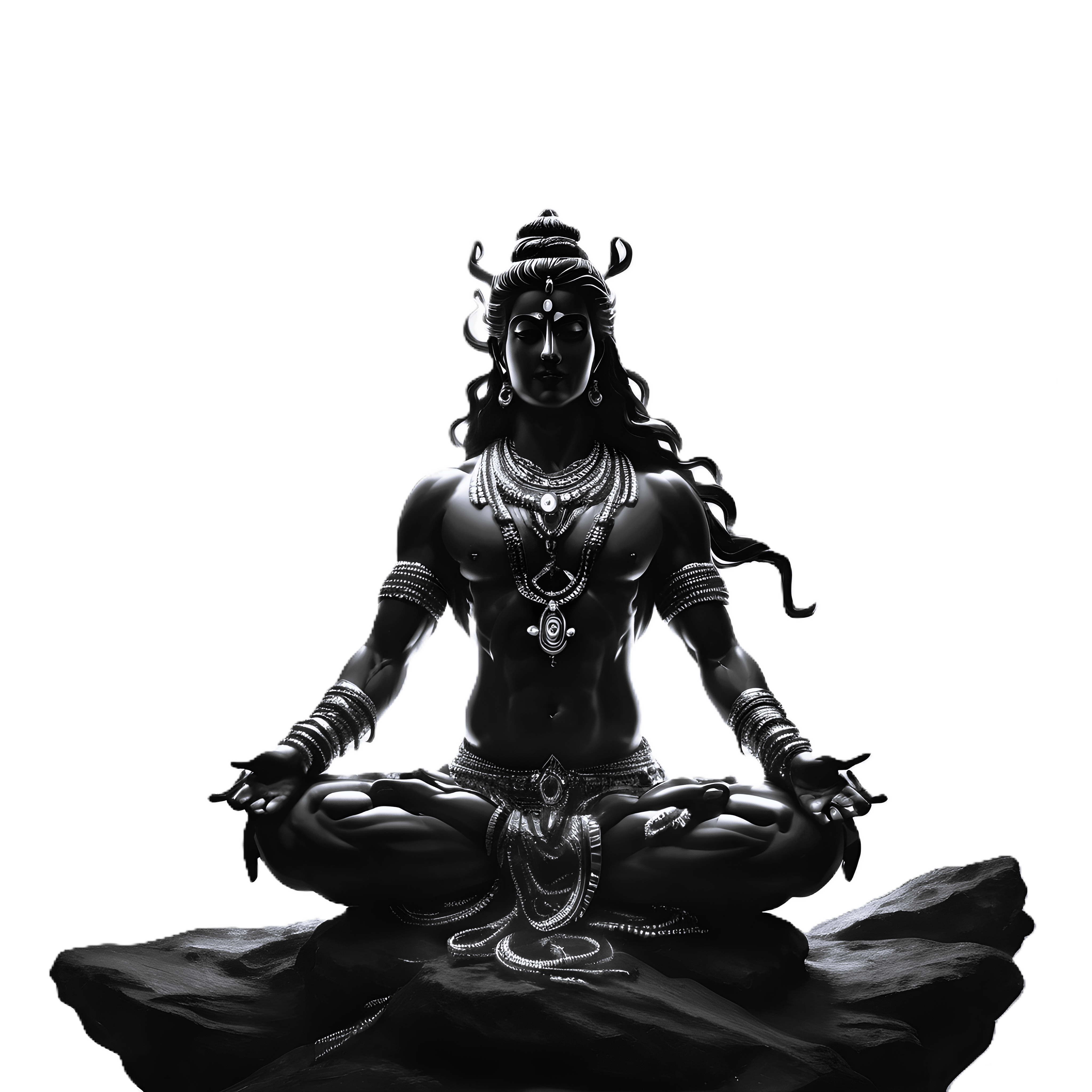
Manifesting isn’t just about wanting something and hoping it appears. At its core, it’s the art of aligning your inner reality with your outer reality. Every thought, feeling, and belief you hold emits a subtle energetic signature that interacts with the universe. The clearer, more coherent, and more emotionally charged your focus, the more likely the external world will mirror it.
Focus and Clarity: Manifesting requires you to know what you truly want. If your desire is foggy, the universe reflects that fog.
Emotion and Embodiment: Feeling the reality as if it already exists—experiencing the joy, excitement, or peace of your manifestation—is the energetic “magnifier” of the process.
Subconscious Alignment: Your subconscious is the stagehand that sets up the props for your manifestation. If your subconscious beliefs contradict your conscious desires, manifestation stalls.
Remembering is deeper than recalling a memory. It’s tapping into the innate wisdom of your consciousness, the part of you that already knows what is true and possible. In the context of manifesting, remembering serves as the bridge between your present self and the life you desire.
- Remembering as Reconnection
- At our core, we’ve always had access to the creative force of the universe. Remembering is the act of reconnecting to that innate power.
- It’s not learning something new; it’s reawakening to what you inherently know.
- Remembering as Alignment
- Often, manifestation fails not because desires are impossible, but because we’ve “forgotten” our alignment with them.
- Remembering allows you to recalibrate your thoughts, emotions, and actions to match the reality you wish to experience.
- Remembering as Witnessing
- True remembering involves stepping into a state of awareness beyond the ego’s filters.
- It’s observing your beliefs, habits, and thought patterns without judgment, then consciously choosing which ones serve your manifestation.
- Remembering as Embodiment
- To remember is to embody your desired reality before it physically arrives.
- When you remember the truth of your creative power, you naturally act, think, and feel in ways that manifest it.
Manifesting Through Remembering
How remembering amplifies manifestation:
- Memory of Possibility: You recall that the universe responds to intention, which strengthens your faith and removes resistance.
- Memory of Self: You remember who you are at your highest potential, allowing you to move beyond limiting self-perceptions.
- Memory of Feeling: You reconnect to the emotions tied to your desired reality, giving your manifestation energetic fuel.
In essence, remembering is the internal GPS for manifestation. Without it, you may wander in circles, chasing fleeting desires or confusing what you want with what you think you “should” want. With it, manifestation becomes less about forcing outcomes and more about returning to your natural state of creative alignment.
There is a layer beneath technique that almost no one talks about. It is quieter than affirmations and subtler than visualization. It is the strange ache that happens when you desire something deeply. That ache is not lack. It is recognition.
When you truly want something, it does not feel foreign. It feels familiar. Almost nostalgic. Like hearing a melody you somehow know the words to even though you swear you have never heard it before. That familiarity is remembering. Not remembering an event from your past, but remembering a version of you that already exists in potential. Desire is often memory wearing a disguise.
Most people try to manifest by constructing. They build mental blueprints. They rehearse scenes. They attempt to generate emotion on command. But remembering is different. Remembering is subtractive. It is peeling back the noise until you can sense what has always been humming beneath your current identity.
At the heart of remembering is identity. Not the personality, not the roles, not the biography. Identity as in the core assumption about who you are allowed to be. Manifestation bends around identity like light around gravity. If you assume you are someone who struggles, reality will arrange itself into confirmation. If you assume you are someone who is chosen, supported, destined for expansion, the world reorganizes accordingly. Remembering is the process of returning to your original assumption before doubt layered itself on top.
There is also something rarely addressed: forgetting is part of the design. We forget our power so that rediscovery feels real. If we walked around fully conscious of our creative authority, the experience of life would flatten. Surprise would dissolve. Contrast would vanish. Forgetting creates tension. Remembering releases it. The tension between the two is the engine of experience.
Deep remembering often arrives through discomfort. When something triggers you intensely, that reaction is not random. It is friction between who you currently believe yourself to be and who you are becoming. The discomfort is the mind’s protest against expansion. But beneath the protest is recognition. A quiet voice saying, this is closer to the truth than what you were settling for.
There is another layer that feels almost mystical. When you remember, time behaves differently. You stop chasing the future and instead begin relating to it as something that already exists. Not in a delusional way, but in a structural way. The nervous system calms. Urgency softens. You move with a subtle certainty that does not need external validation. This is why some manifestations appear suddenly after you “let go.” It is not that you stopped caring. It is that you stopped trying to manufacture belief and instead returned to what felt inherently true.
Remembering also dissolves the split between spirituality and psychology. On a neurological level, when you repeatedly imagine and emotionally embody a reality, you are building neural pathways that treat it as familiar. Familiarity equals safety. Safety reduces resistance. Resistance is often the only thing blocking manifestation. So remembering is not fantasy. It is biological rehearsal of identity until the body accepts it as baseline.
And here is something even more intimate: sometimes what you are manifesting is not the thing itself. It is the feeling of coherence. The job, the relationship, the success are symbols. They represent a version of you that feels whole. When you remember that wholeness directly, without needing the symbol first, you shift the equation. The external reality then becomes a reflection rather than a requirement.
The heart of remembering is this: you are not trying to become someone new. You are recovering someone buried. The world you desire may not be ahead of you. It may be encoded within you, waiting for recognition.
Manifestation then stops being a performance and starts becoming a reunion. And reunions have a particular emotional quality. They are calm. They are certain. They carry the strange sweetness of something that feels both brand new and ancient at the same time.
The deeper you go, the more you realize that remembering is not about forcing belief. It is about relaxing into what resonates so strongly that it feels like truth before evidence. And when something feels like truth long enough, reality tends to agree.
Why is desire often memory wearing a disguise?
Because desire rarely feels random.
It does not enter like a stranger knocking on your door. It slips in like someone who already knows the layout of the house.
When you want something deeply, there is usually a sense of recognition wrapped around it. Not just attraction, not just curiosity, but familiarity. That familiarity is the key. The mind interprets it as longing. The nervous system interprets it as incomplete. But beneath both interpretations is a subtler signal that says, this belongs to you in some way.
Desire can feel like memory because it carries emotional texture before physical evidence. You do not just want the relationship. You can almost feel the warmth of it. You do not just want the success. You can taste the relief, the expansion, the solidity of being that version of yourself. Where does that texture come from if you have never experienced it?
Part of it is psychological. The brain builds internal models constantly. You simulate futures. You rehearse identities. Over time, these simulations become neurologically familiar. The brain does not sharply distinguish between vividly imagined and physically lived experiences. So when a future identity has been rehearsed enough, it begins to feel like something remembered rather than something invented.
But there is also a deeper layer.
Desire often points toward suppressed identity. As children, we move with instinctive certainty. We assume we are capable, expressive, expansive. Then conditioning layers itself on top. Expectations. Fear. Comparison. Practicality. The original sense of self becomes quieter. Not gone. Just quieter.
When a desire surfaces, especially one that persists despite logic, it can be that earlier, unfiltered self signaling through. It feels like longing because the current identity and the original identity are slightly out of sync. The tension between them registers as desire.
There is also the phenomenon of emotional déjà vu. Sometimes you encounter an opportunity or idea and it feels charged, almost electric. Not because it is objectively superior, but because it resonates with an internal blueprint you already carry. That resonance feels like remembering. The mind translates it as I want that. But energetically it feels more like I know that.
Desire is also memory in the sense that it remembers how you are meant to feel. Even if you have never had the exact experience, you have tasted versions of its core emotions. Safety. Expansion. Recognition. Freedom. Those emotional states are native to you. When a desire arises, it is often your system saying, return to that state. The object of desire becomes a symbolic doorway.
This is why some desires fade quickly. They were impulses. Curiosities. But the ones that linger for years carry a different quality. They feel almost sacred. Almost inevitable. You can ignore them, rationalize them, postpone them, but they do not fully disappear. They feel like unfinished sentences in your life story.
That is memory disguised as wanting.
Not necessarily memory of a past life or some mystical timeline, though some people interpret it that way. More simply, memory of your own potential. Memory of the shape your spirit takes when it is unrestricted. Memory of coherence.
Desire, at its deepest, is not about acquiring. It is about returning.
Returning to a state where who you are internally and what you experience externally are aligned. The disguise is the object. The memory is the identity.
And when you see it that way, desire stops being evidence of lack. It becomes evidence of recognition.