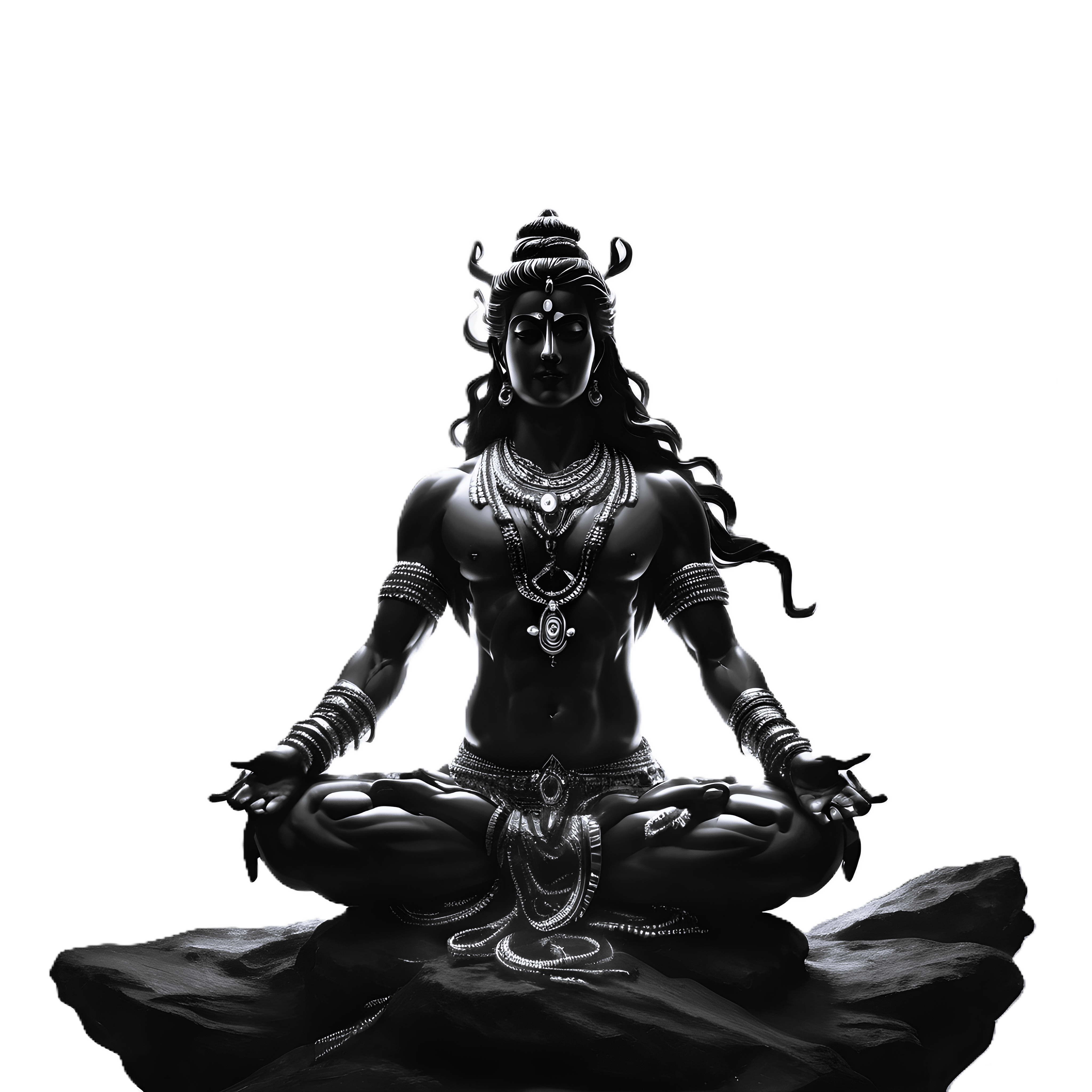
There is something unnerving about human similarity.
Not superficial similarity. Not the predictable overlap produced by trade routes or globalization or the internet flattening cultures into algorithmic soup. Something deeper. Stranger. Older.
A civilization builds pyramids beneath one sky.
Another raises stone monuments beneath another.
One society passes down legends of oceans rising against humanity.
Another remembers a great deluge.
One imagines invisible threads connecting thought and reality.
Another creates prayer.
Another creates manifestation.
Another creates ritual magic.
Another creates meditation.
Across centuries, humans continue arriving at the same symbolic conclusions through wildly different doors.
The rational mind insists this is coincidence, convergence, or evolutionary psychology. And certainly, part of it is. Human beings share similar biology. Similar fears. Similar cognitive structures. Similar existential dilemmas. Put enough nervous systems on a planet long enough and patterns will emerge.
Yet sometimes the repetition feels too emotionally precise.
Not copied.
Remembered.
As though humanity is not inventing certain ideas for the first time, but rediscovering them from somewhere submerged beneath conscious awareness.
Like divers surfacing with fragments of the same drowned city.
The Uncomfortable Possibility
What if consciousness is not entirely individual?
Modern culture trains people to imagine the self as sealed. A private island. Your thoughts belong to you. Your imagination originates solely inside your skull. Inspiration is treated as personal property generated by neurological weather patterns firing in isolation.
But history does not behave as though minds are fully separate.
Ideas appear simultaneously across continents. Scientific discoveries emerge independently at nearly identical moments. Spiritual systems separated by oceans produce eerily parallel metaphysical structures. Artists describe “receiving” visions rather than inventing them. Writers speak of characters acting independently. Inventors claim breakthroughs arrive fully formed, as though intercepted rather than constructed.
Even language around inspiration betrays this mystery.
People say:
“It came to me.”
“I tapped into something.”
“The idea arrived.”
“I downloaded it.”
As though thought itself behaves less like manufacture and more like transmission.
Perhaps the ancients were not primitive for believing in muses, divine whispers, prophecy, collective spirits, or cosmic intelligence. Perhaps they were describing an experience modernity sterilized into neuroscience terminology.
Not because science is wrong.
But because science often describes mechanisms without touching meaning.
A radio can explain circuitry without explaining music.
Manifestation and the Architecture of Attention
This is where manifestation becomes psychologically and philosophically dangerous in the most fascinating way possible.
Most shallow interpretations reduce manifestation to wishful thinking wrapped in aesthetic packaging. Think positively. Visualize. Repeat affirmations. Wait for the universe to deliver your customized reality like celestial online shopping.
But the deeper interpretation is far more unsettling.
What if manifestation is not about controlling reality?
What if it is about tuning perception into realities already attempting to emerge?
Human attention is not passive. Attention alters emotional salience, memory encoding, behavioral choices, pattern recognition, and interpersonal energy. The brain continuously filters reality through expectation. Out of billions of sensory inputs, consciousness selects what matters.
In that sense, manifestation is already happening constantly.
Beliefs sculpt perception.
Perception sculpts action.
Action sculpts probability.
Probability sculpts lived reality.
But ancient traditions pushed further than psychology.
They suggested thought itself participates in reality.
Not metaphorically.
Literally.
Mystics across cultures repeatedly arrived at the same conclusion:
consciousness and reality are entangled.
Not separate systems.
Interwoven processes.
The modern mind recoils at this because industrial civilization worships material certainty. Yet physics itself destabilized certainty long ago. Observation affects systems. Reality behaves probabilistically beneath the surface. Matter dissolves into fields, relationships, and invisible structures more abstract than solid.
The deeper science travels, the less reality resembles a machine and the more it resembles thought.
Or dream.
Or information.
Humanity May Be Remembering an Older Relationship With Reality
Ancient cultures did not separate spirituality, psychology, symbolism, art, and cosmology the way modern civilization does. Those divisions are relatively recent. To ancient minds, imagination was not fake. Symbolism was not decorative. Ritual was not performance.
These were technologies of consciousness.
A symbol was believed to alter the psyche.
Words carried energetic force.
Collective belief shaped destiny.
Ceremony synchronized human emotion with invisible structures of meaning.
Modernity dismissed much of this as superstition while quietly preserving the same mechanisms under different names:
branding,
advertising,
political theater,
cinema,
social media algorithms,
nationhood,
celebrity worship.
Human beings never stopped responding to symbols.
We industrialized them.
The logo replaced the sigil.
The influencer replaced the oracle.
The algorithm replaced the priesthood.
Yet underneath modern aesthetics, the ancient machinery remains operational.
Because humans are symbolic creatures living inside psychological realities masquerading as objective ones.
The Collective Unconscious May Be More Literal Than We Think
Carl Jung proposed that humanity shares inherited archetypal structures buried beneath individual consciousness. Certain symbols recur because they are embedded into the architecture of the psyche itself.
The mother.
The shadow.
The hero.
The wise old figure.
The rebirth.
The sacred union.
But what if archetypes are not merely psychological?
What if they are informational patterns consciousness repeatedly organizes around, like gravity organizing matter into stars?
Perhaps civilizations independently generate similar myths because consciousness naturally crystallizes into recurring symbolic structures. Just as snowflakes form through invisible mathematical laws, cultures may form through invisible psychological ones.
This would explain why myths feel familiar even when foreign.
Why ancient symbols still trigger emotional recognition.
Why dreams often resemble stories older than the dreamer.
Maybe humanity shares not only biology, but psychic architecture.
Not a hive mind.
Something subtler.
A submerged ocean beneath the islands of individuality.
The Internet Accidentally Revealed Something Ancient
Ironically, technology may have exposed how interconnected consciousness already was.
The internet did not create collective thought.
It externalized it.
Memes spread like modern folklore.
Emotions ripple globally within hours.
Ideas mutate collectively.
Identity becomes increasingly decentralized and symbolic.
Humanity now behaves visibly like a nervous system.
Billions of minds linked through instantaneous informational exchange begin resembling neurons firing across a planetary brain.
And something peculiar emerges from this network:
people begin thinking the same thoughts simultaneously.
Aesthetic movements arise globally overnight.
Language evolves collectively.
Symbolic obsessions appear in waves.
Entire populations lock into emotional frequencies.
The digital age did not invent collective consciousness.
It made it impossible to ignore.
Perhaps Memory Exists Beyond the Individual
The deepest possibility is also the most difficult to prove.
Maybe consciousness stores itself in ways we do not yet understand.
Not memory in the ordinary sense.
Something more atmospheric.
Rupert Sheldrake called it morphic resonance.
Mystics called it the Akashic field.
Religions called it spirit.
Poets called it eternity.
Whatever the terminology, humanity repeatedly circles the same intuition:
nothing is fully lost.
Experiences leave impressions.
Thought leaves residue.
Emotion echoes.
Perhaps cultures inherit more than genes.
Perhaps they inherit psychic momentum.
And perhaps manifestation works partly because humans participate in realities shaped not only by matter, but by accumulated belief across generations.
A civilization imagining scarcity long enough produces scarcity consciousness.
A civilization imagining divinity long enough begins encountering sacredness everywhere.
Reality may not merely be observed.
It may be rehearsed into existence collectively.
The Ancient Secret Hidden Inside Modern Life
The modern world treats imagination as secondary.
Ancient cultures often treated it as foundational.
That difference changes everything.
Because if imagination participates in reality formation, then humanity’s myths are not random stories.
They are blueprints.
Not necessarily factual in a literal sense.
True in a deeper one.
A myth survives because it organizes human consciousness effectively.
It becomes a psychological operating system passed through generations.
This is why stories alter civilizations.
Why symbols outlive empires.
Why belief can build nations or destroy them.
Why two people can inhabit entirely different realities while standing in the same room.
Consciousness is not merely looking at the world.
It is helping compose it.
Maybe We Are the Universe Remembering Itself
And perhaps this is the strange emotional gravity beneath manifestation, ritual, synchronicity, and recurring human symbolism.
Maybe humanity feels haunted by deeper memory because consciousness itself is ancient beyond comprehension.
Not your personality.
Not your name.
Not your temporary identity.
The awareness underneath.
The witness.
The thing looking through human eyes across every century.
Civilizations rise and fall like thoughts passing through a larger mind. Symbols repeat because reality itself may be recursive. Consciousness keeps rediscovering the same truths because existence keeps speaking in the same hidden language.
And occasionally, during ritual, meditation, art, love, grief, dreams, or moments of impossible synchronicity, the membrane thins.
For one suspended second, the individual no longer feels entirely separate from the whole.
The universe stares back at itself through human consciousness.
And remembers.