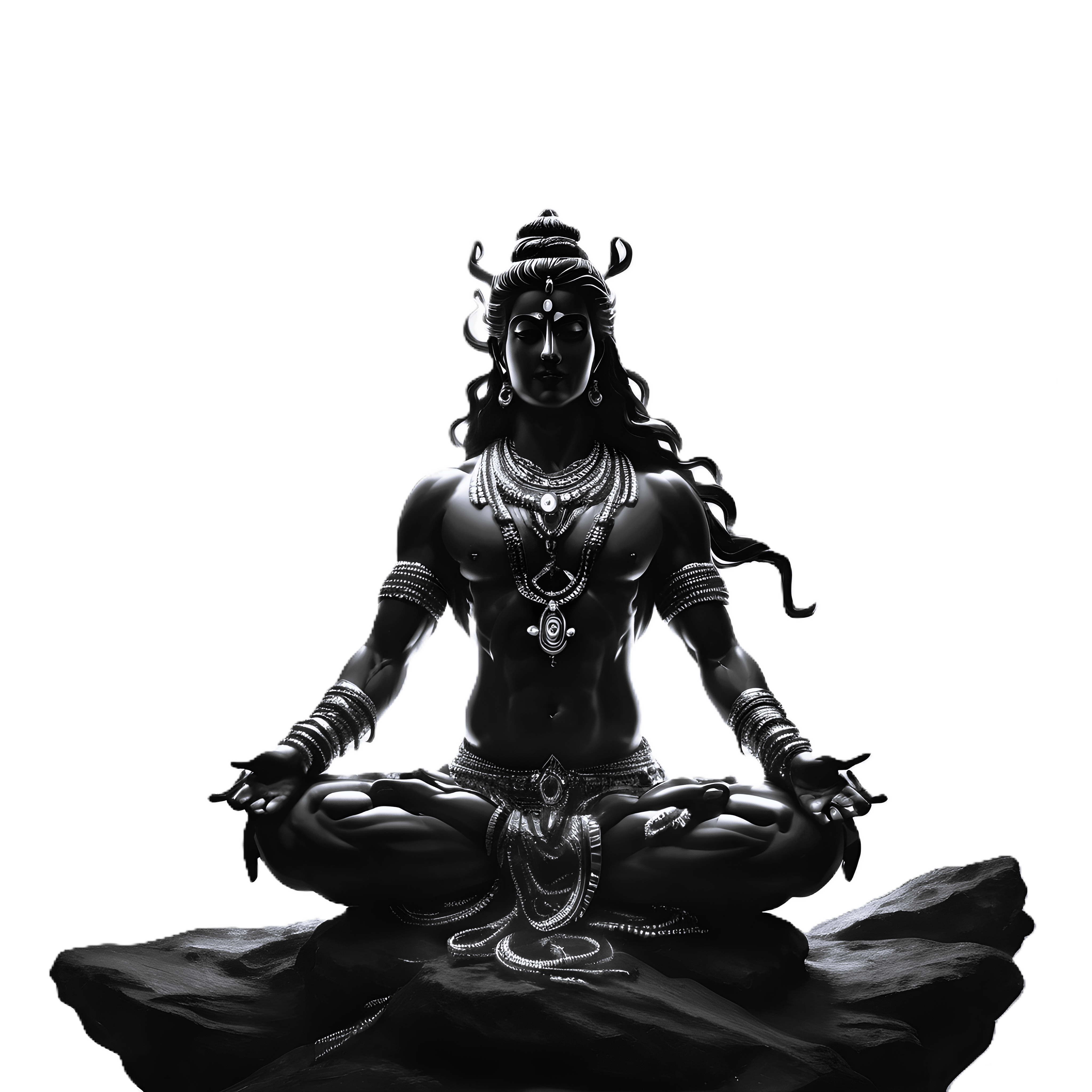
Every human being is a storyteller. Not necessarily through books or speeches, but through meaning itself. We are constantly translating experience into narrative. A failed relationship becomes a tragedy, a lesson, a betrayal, or a turning point depending on the story we assign to it. The events may remain unchanged, yet interpretation reshapes the entire emotional architecture of a life. The unusual part is that most people never realize they are the authors of these interpretations. They assume they are characters inside a fixed script rather than consciousness actively editing the script as it unfolds.
In the private theater of the mind, we tend to cycle through four archetypal roles: the Hero, the Victim, the Villain, and the Sage. These are not identities in a rigid sense, but shifting states of awareness. We move between them fluidly, sometimes within a single day, often without noticing. Yet each role changes what we see, how we interpret events, and what we believe is possible. Understanding them is less about labeling oneself and more about recognizing the lens currently shaping perception.
The Hero views life as a journey of becoming. Challenges are not punishments but invitations. Obstacles become terrain to navigate rather than walls that define limitation. The Hero asks, “What can I learn from this?” and even in difficulty, searches for movement, direction, and growth. This archetype carries momentum because it preserves agency. Even when circumstances are harsh, the Hero insists that response is still available, and within response lies transformation.
Yet the Hero can become over-identified with struggle itself. Growth may become so central that peace feels unfamiliar, even suspicious. The Hero may begin to unconsciously seek challenges simply to validate their own resilience. In doing so, life becomes a sequence of battles rather than a living continuum. At some point, the Hero must learn that not every moment requires conquest, and not every silence is an obstacle.
The Victim, in contrast, experiences life as something happening to them. External forces become dominant, and personal agency feels diminished or absent. Language often reflects this orientation: nothing works, everything is against me, there is no point trying. These are not merely expressions of emotion but structures of identity. The Victim archetype does not simply describe suffering; it interprets suffering as evidence of permanent helplessness.
And yet, paradoxically, the Victim state can feel safe. If control is located entirely outside the self, then responsibility disappears along with it. The emotional burden of choice is temporarily lifted. But so too is the possibility of change. Over time, this perception can reinforce itself, as attention filters out evidence of influence and collects proof of limitation. Reality begins to mirror expectation, not because the world is fixed, but because perception has narrowed.
The Villain archetype emerges when power is pursued through control, blame, or domination. Unlike the Victim, who relinquishes agency, the Villain attempts to seize it by projecting fault outward. Someone must be responsible, someone must be wrong, someone must be the obstacle. Even when justified in feeling harmed, the Villain frame transforms complexity into opposition. It reduces the world into sides, and the self into a force that must win.
This archetype is often subtle rather than theatrical. It can appear as chronic resentment, constant criticism, superiority, or the need to mentally defeat others in order to feel stable. The Villain believes power is gained externally, through influence over others rather than clarity within oneself. Yet this pursuit rarely resolves insecurity. It reinforces it, because external control is always temporary, and internal unrest remains untouched.
The Sage represents a different orientation entirely. The Sage is not detached from life, but deeply attentive to it. Where the Hero asks how to grow, the Sage asks how to understand. Where the Victim asks why this is happening to me, the Sage asks what this reveals about the structure of experience. Where the Villain seeks enemies, the Sage seeks patterns.
The Sage recognizes that human behavior is shaped by unseen histories, unspoken fears, and inherited conditioning. This recognition does not remove accountability, but it dissolves simplistic judgment. The Sage still acts, still chooses, still engages with the world, but without being fully consumed by narrative certainty. There is a pause between stimulus and reaction, and in that pause, intelligence begins to breathe.
At a deeper level, these archetypes reveal something fundamental about perception itself. Reality is not experienced directly in a raw form; it is filtered through interpretation. Two people can live through the same event and construct entirely different realities from it. One experiences proof of hostility, another experiences evidence of endurance. The external world remains constant, but the internal rendering changes everything.
This is why these roles matter. They function as perceptual engines. The Hero notices possibility. The Victim notices constraint. The Villain notices threat. The Sage notices structure. None are inherently permanent, and none define the totality of a person. They are lenses, not prisons.
The most significant realization is that you are not any of these roles in essence. You are the awareness capable of observing them. Each role may arise when conditions call it forward. There are moments when the Hero is necessary, moments when the Victim state reflects genuine overwhelm, moments when the Villain shadow appears under fear, and moments when the Sage quietly brings clarity. The difference lies in whether you are identified with the role or conscious of it.
When a person begins to notice the shift rather than unconsciously become it, something subtle changes. The story loses its absolute grip. A gap opens between experience and interpretation. In that gap, choice becomes possible again.
If life is a narrative, then awareness is the author. Not an author who controls every event, but one who decides how meaning is shaped after the fact. And in that realization, the question is no longer which archetype defines you permanently, but which one you are choosing to embody in this moment, and whether that choice still serves the life you are trying to create.