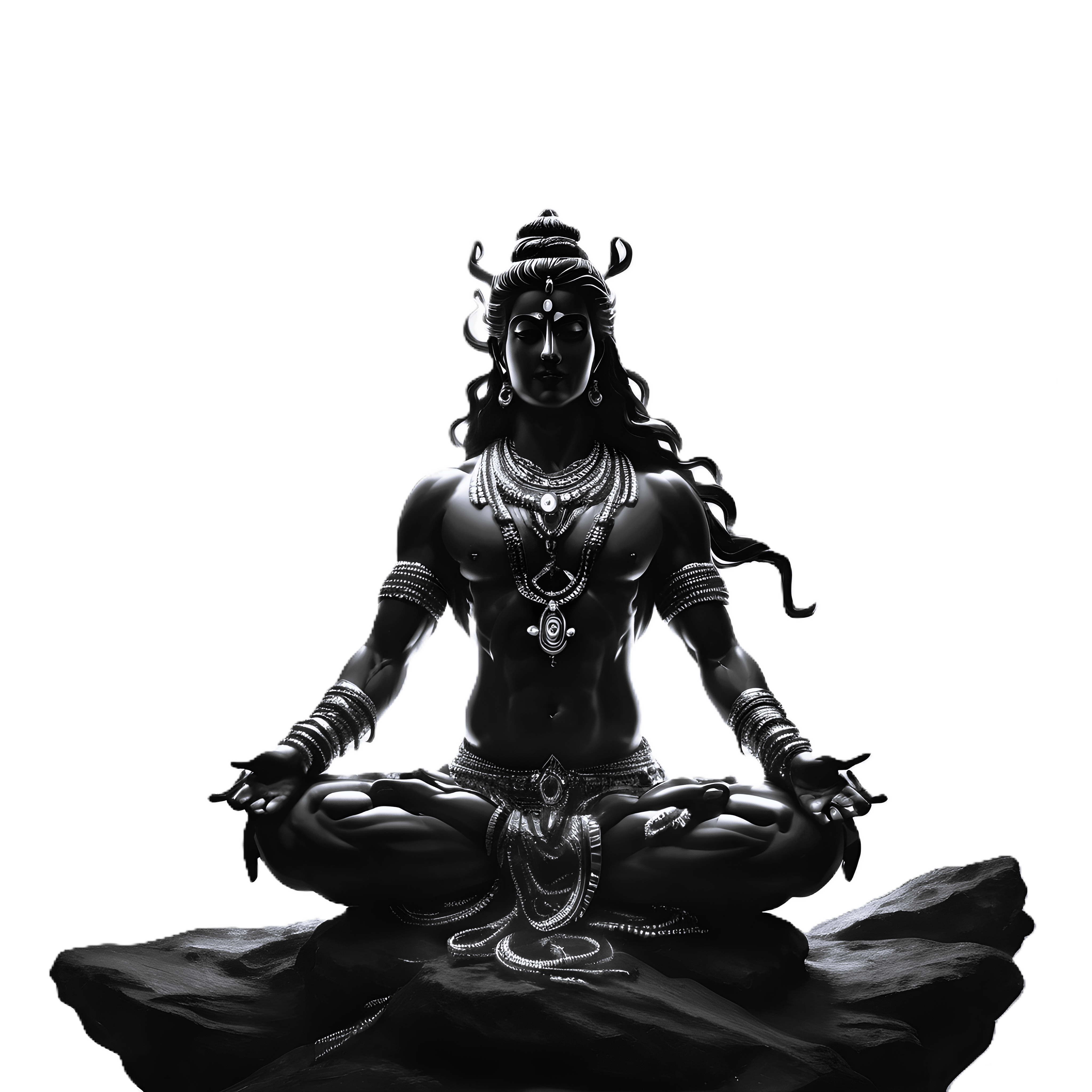
Most people assume they are living life directly. They believe they are responding to events as they happen, touching reality in its raw form like a hand against cold glass. But beneath thought, beneath emotion, beneath personality itself, there exists something quieter and far older than identity. The observer.
The observer is the awareness behind experience. It is the part of you that notices your thoughts without being those thoughts. The witness behind anger. The stillness behind panic. The strange, unspoken presence that remains even when your personality changes over the years like seasons replacing one another.
You can watch this phenomenon in real time. A thought appears: I am failing. Another follows: I am not enough. Yet something notices these sentences arriving. If awareness can observe the thought, then awareness itself cannot be the thought. The observer exists one layer deeper than the mind’s theatre.
Modern neuroscience circles around this mystery without fully capturing it. Psychology speaks of metacognition, the ability to think about thinking. Meditation traditions call it pure awareness. Quantum philosophy occasionally drifts into poetic territory, proposing that observation itself influences reality. Though these fields disagree on mechanisms, they orbit the same gravitational center: consciousness is not merely a passive camera recording existence. It shapes experience through attention.
Attention is one of the most underestimated forces in human life. Whatever the observer repeatedly focuses on gains psychological weight. The brain begins constructing highways toward it. Neural pathways strengthen. Patterns become easier to notice. Emotional reactions become automated. Eventually the observer forgets it was ever choosing where to look.
This is how invisible prisons are built.
A person convinced the world is hostile will unconsciously collect evidence like a detective obsessed with one conclusion. Every rude stranger becomes proof. Every disappointment becomes doctrine. Meanwhile moments of kindness pass unnoticed like stars hidden behind city lights. The observer filters reality not because reality is false, but because consciousness has limited bandwidth. Attention edits existence.
In this sense, the observer behaves less like a mirror and more like a spotlight.
Ancient philosophies understood this intuitively. In Buddhism, attachment to thoughts creates suffering because people mistake mental weather for identity. In Stoicism, perception determines emotional experience more than circumstance itself. Even modern algorithms mimic the same principle. Social media feeds learn from what users linger on. The machine watches the observer watching.
Human beings are becoming externalized versions of their own attention patterns.
There is also a darker dimension to the observer. Most people are not observing consciously. They are being observed by conditioning. Childhood experiences, cultural programming, trauma, fear, status, advertising, and endless digital stimulation construct internal scripts that run automatically beneath awareness. Many individuals believe they are making choices when they are merely re-enacting psychological code written years earlier.
To awaken the observer is to interrupt automation.
This interruption often feels uncomfortable at first. Silence exposes how noisy the mind truly is. Stillness reveals emotional debris long buried beneath distraction. Many avoid solitude not because silence is empty, but because silence is revealing. The observer begins noticing how fragmented modern consciousness has become, split into notifications, anxieties, performance, and constant comparison.
Yet within this discomfort lies freedom.
The moment you can observe a reaction without immediately becoming it, a new dimension of choice appears. Anger may arise, but the observer can notice it before acting upon it. Fear may surge through the nervous system, but awareness creates distance between sensation and identity. This distance is transformative. It is the birthplace of self-mastery.
The observer is not emotionless. It is simply spacious.
Artists often encounter this state during creation. Athletes experience it in flow states where action becomes effortless and time distorts. Mystics describe it as union. Scientists sometimes glimpse it during deep concentration when the sense of self dissolves into pure engagement. Across disciplines, the language changes but the architecture remains remarkably similar: the observer expands while the ego quiets.
Modern society, however, profits from fractured attention. Entire industries compete to hijack the observer through outrage, stimulation, desire, and fear. The economy of the digital age is built not merely on products, but on consciousness itself. Every scroll becomes a battle for perception. Every notification pulls awareness outward. In a world constantly demanding your attention, reclaiming the observer becomes an act of rebellion.
This may explain why practices like meditation, journaling, contemplation, and deep creative work feel strangely powerful. They restore sovereignty over awareness. They train the observer to remain steady amid chaos rather than being dragged by every emotional current.
Ultimately, the observer raises one unsettling question:
If you can observe your thoughts, emotions, memories, and even your identity, then who exactly are you?
Not your name. Not your history. Not the costume stitched together from social expectation. Those are objects within awareness. The observer stands behind them all, silent and difficult to define, like the dark matter of consciousness itself.
Perhaps this is why moments of profound clarity often feel less like learning something new and more like remembering something ancient. Beneath the noise of modern existence, the observer has always been there. Watching quietly. Waiting beneath the architecture of thought like the sky behind weather.
And maybe the greatest shift a human being can experience is not becoming something new, but finally noticing the one who has been looking through their eyes the entire time.