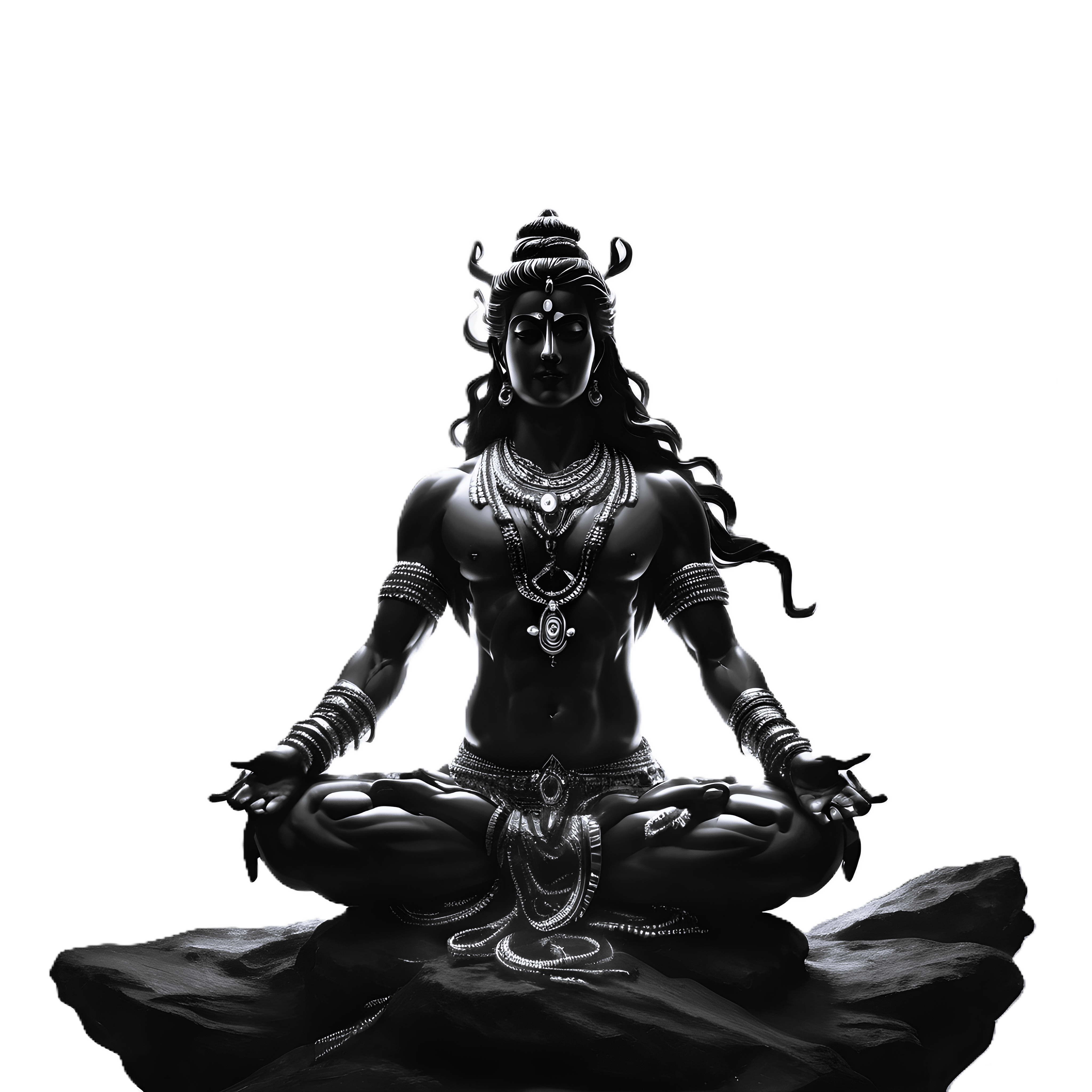
A midnight debate at Dante’s Penthouse
Conducted by Clarity
There are nights when a room becomes more honest than the people inside it.
Dante’s Penthouse was having one of those nights.
London had gone black beneath the windows, the city reduced to scattered gold and the occasional red pulse of a distant aircraft. There was wine on the table, whiskey beside it, olives nobody was eating, pistachios somebody kept stealing, and the remains of a plate of truffle fries that had entered the final philosophical stage of existence: cold, expensive and somehow still irresistible.
It was past midnight.
Clarity sat barefoot on the sofa, one leg tucked beneath her, holding a glass of wine by the stem.
Across from her were four men who had, between them, managed to turn a simple psychological question into something dangerously close to metaphysics.
Shaurya was stillness.
Damian was beautifully controlled disorder.
Idris looked like he had never met a desire he considered unreasonable.
Gabriel looked like he had met several and flirted with all of them.
The question on the table was deceptively simple.
Why do people sabotage the thing they asked for?
Clarity looked around.
“Let’s make this interesting.”
Idris raised his glass.
“You usually do.”
“Why,” she asked, “does a person spend six months asking for love, finally meet someone they adore, and then become emotionally unavailable?”
Damian smiled.
“Because they wanted the fantasy.”
Shaurya shook his head.
“No. They wanted the outcome without becoming the person capable of sustaining it.”
Gabriel stole an olive.
“Or they got bored.”
Three heads turned.
“What?” Gabriel said. “It happens.”
Clarity laughed.
“Good. Let’s start there.”
I. THE THING YOU ASKED FOR
CLARITY: Idris, you first. Why does someone sabotage what they want?
IDRIS: Because most people lie about what they want.
DAMIAN: That’s unnecessarily aggressive.
IDRIS: It’s accurate.
A person says they want love. What they often want is to be wanted. There is a difference. They want someone beautiful to choose them. They want the message at 1:17 a.m. They want someone to look at them as though the entire room has become irrelevant.
They want pursuit. They want obsession. They want evidence. Then the person arrives.
And suddenly there is another problem.
Now they can be rejected. Now they can be known. Now they can disappoint someone. Now they have something to lose.
Before the manifestation arrives, desire is safe.
After it arrives, desire acquires consequences. That’s when people panic.
SHAURYA: That’s only half of it.
IDRIS: Naturally.
SHAURYA: You are describing fear of vulnerability. I’m describing something subtler. People sabotage what they asked for when the reality of receiving it conflicts with the identity they built while waiting for it.
CLARITY: Explain.
SHAURYA: Imagine someone spends years saying, “One day I’ll be successful.”
That statement sounds positive. But psychologically, it can become an identity.
I am the person who is becoming successful.
The becoming becomes familiar. The arrival does not. So when success actually approaches, the person encounters something strange.
They no longer know who they are. The struggle was part of their identity. The hunger was part of their identity. The dream was part of their identity. Now the dream is sitting across the table asking what happens next.
DAMIAN: That’s the part nobody romanticises.
The after.
People adore becoming.
Becoming is cinematic. Becoming has music. Becoming has late nights, stolen glances on balconies, journals full of declarations, train journeys where you stare out the window and decide you’re going to become someone else.
But receiving?
Receiving is terribly intimate. You have to live there.
GABRIEL: Which is why people sometimes destroy things just before they become real.
CLARITY: You sound as though you know.
Gabriel smiled. “I’ve been accused.”
II. THE HORROR OF GETTING IT
CLARITY: Let’s make this personal.
Suppose someone has wanted a particular person for years.
Not abstractly.
That person.
The face. The voice. The ridiculous laugh. The way they used to look at them across a room. The person leaves.
Heartbreak follows.
Years later, the two meet again. The feelings are still there. Everything they once wanted is suddenly standing in front of them.
And they run. Why?
DAMIAN: Because memory is seductive.
IDRIS: Because they are terrified.
SHAURYA: Because the imagined relationship was under their control.
GABRIEL: Because sometimes the person is hotter in memory.
Silence.
Damian laughed first.
Clarity covered her mouth.
Shaurya looked offended by the universe.
Idris pointed at Gabriel.
“You are a menace.”
“Thank you.”
DAMIAN: He isn’t entirely wrong.
We romanticise people in absence. The mind edits. It removes the awkwardness.
The arguments. The bad timing. The strange habits. The moments where the chemistry didn’t work.
What remains is distilled.
A person becomes an atmosphere. A scent. A song. A particular street at night. A version of yourself you only remember when you remember them.
Then they return.
And suddenly the fantasy has a body. The person breathes. They disagree.
They have changed. They want things. They have their own wounds. The beautiful ghost becomes a human being. And human beings are much more difficult to love than ghosts.
CLARITY: So you think people sabotage because reality cannot compete with fantasy?
DAMIAN: Sometimes. But there is something darker. Sometimes reality is better. And that is precisely the problem.
III. WHEN THE FANTASY BECOMES REAL
The room went quiet. Damian reached for his whiskey.
DAMIAN: Fantasy lets you desire without surrendering control.
You can imagine someone loving you without having to risk discovering whether they actually will. You can imagine success without having to discover whether you can carry it. You can imagine wealth without discovering what responsibility comes with it. You can imagine freedom without asking what you will do when nobody tells you what to do.
Fantasy is consequence-free possession.
Reality isn’t.
IDRIS: That’s why I prefer taking risks.
SHAURYA: You prefer adrenaline.
IDRIS: Same family.
SHAURYA: No. Adrenaline is not courage. Sometimes adrenaline is simply fear moving quickly.
Idris smiled.
“That’s annoyingly good.”
“I know.”
Clarity leaned forward.
“So what happens when someone finally gets the thing they wanted?”
Shaurya answered quietly.
“They discover what they actually wanted.”
IV. THE SECOND DESIRE
CLARITY: Explain.
SHAURYA: A person says:
“I want money.”
They receive money. Then they discover they wanted safety.
Someone says:
“I want a relationship.”
They receive one. Then they discover they wanted validation.
Someone says:
“I want success.”
They receive it. Then they discover they wanted freedom.
Someone says:
“I want revenge.”
They get it. And discover they wanted peace. The object was never the final desire. It was a symbol.
DAMIAN: Which is why getting what you want can feel strangely anticlimactic.
You don’t receive the emotional state you imagined automatically. You receive the object. Then you realise the object was carrying a burden it was never designed to carry.
No lover can permanently repair your relationship with yourself. No amount of money can guarantee safety from existence. No achievement can permanently silence the part of you that believes you are inadequate. No person can become the proof of your worth without eventually becoming a prisoner of that job.
IDRIS: That’s depressing.
DAMIAN: It’s liberating.
IDRIS: You would say that.
DAMIAN: You would say anything if there were witnesses.
GABRIEL: He’s got you there.
Idris laughed.
V. THE SUBCONSCIOUS DOESN’T CARE ABOUT YOUR SPEECHES
CLARITY: Let’s talk about the subconscious.
People say, “I want this.”
Then their behaviour says something completely different.
Why?
SHAURYA: Because the conscious mind is declarative.
The subconscious is procedural. You can say, “I am worthy of love.” But if your nervous system has learned that intimacy predicts abandonment, your behaviour may still create distance.
You can say, “I am abundant.”
But if your internal model associates money with danger, guilt or instability, you may repeatedly create situations that restore familiarity. The subconscious does not necessarily pursue happiness. It pursues coherence.
DAMIAN: That’s the uncomfortable part.
People assume the mind is always trying to give them what they want. It isn’t. It is often trying to give them what it recognises.
Familiarity can feel safer than happiness. A person can repeatedly choose emotionally unavailable lovers because emotional unavailability is familiar. Then they call it bad luck.
IDRIS: Or they choose unavailable people because unavailable people are more exciting.
CLARITY: Are you confessing again?
IDRIS: I’m offering data.
GABRIEL: He’s offering autobiography.
Idris threw a pistachio at him. Gabriel caught it.
“Thank you.”
VI. WHY CHAOS CAN FEEL LIKE CHEMISTRY
CLARITY: Let’s stay there.
Why do people confuse chaos with chemistry?
Damian looked almost offended by the question.
“Because chemistry is one of the few socially acceptable words we have for being destabilised by someone.”
CLARITY: Elaborate.
“Someone makes you anxious.
You check your phone. They disappear. They return. You feel relief. They pull away again.
You become obsessed. Your nervous system is receiving intermittent reinforcement.”
Shaurya nodded.
“Variable reward schedules can be extremely powerful.”
Damian raised his glass.
“Exactly. And then the person says, ‘I’ve never felt anything like this.’ Perhaps. But intensity is not always intimacy. Sometimes it is uncertainty wearing perfume.”
Gabriel laughed.
“That line is going to get someone divorced.”
“It might save someone from marrying the wrong person.”
Idris leaned back.
“But let’s not become puritans. Sometimes chaos is fun.”
SHAURYA: Of course. Chaos has its place. But there is a difference between aliveness and instability.
IDRIS: And who decides which is which?
SHAURYA: Your nervous system, eventually.
IDRIS: Mine seems to enjoy poor decisions.
GABRIEL: Mine has excellent taste in poor decisions.
VII. THE STRANGE CASE OF THE PERSON WHO GETS EVERYTHING
CLARITY: Gabriel.
You seem least likely to sabotage.
GABRIEL: That’s because I don’t overthink.
Three people immediately laughed.
GABRIEL: Fine.
I overthink occasionally. But I have a theory. People sabotage because they start monitoring the manifestation. They get the thing they wanted and immediately start asking:
“Is it still here?”
“Is this the right person?”
“What if it goes away?”
“Did I manifest it correctly?”
“Is this a sign?”
“Is that a sign?”
“Why did they take four hours to reply?”
“Are they losing interest?”
And suddenly they’re no longer experiencing the relationship. They’re auditing it.
CLARITY: That’s good.
GABRIEL: Of course it is.
DAMIAN: He’s right. There is a moment when receiving becomes surveillance. You stop living inside the experience and start checking whether the experience is still happening.
That destroys presence. And presence is where intimacy lives.
SHAURYA: It is also where control begins to masquerade as care. You think you’re protecting the thing. You’re actually suffocating it.
VIII. CONTROL IS FEAR IN FORMALWEAR
CLARITY: Shaurya, you have written about control as fear wearing a suit. Is sabotage sometimes simply control failing?
SHAURYA: Often. Control is the attempt to eliminate uncertainty. But relationships cannot be controlled without becoming something other than relationships.
Neither can creativity. Neither can life.
You can influence. You can prepare. You can communicate. You can choose. But you cannot guarantee. And when someone becomes terrified of losing something, they often begin doing precisely the things that make loss more likely.
They ask for reassurance until reassurance becomes exhausting. They test loyalty until the relationship becomes a test. They withdraw first so they cannot be abandoned.
They become cold so rejection will hurt less. They create distance and then mourn the distance they created.
DAMIAN: That is one of the saddest human patterns.
“I left before you could leave me.”
IDRIS: And then they call it self-respect.
CLARITY: Sometimes it is self-respect.
IDRIS: Sometimes. But sometimes it’s fear with excellent public relations.
Gabriel grinned.
“That’s going on a T-shirt.”
IX. THE EROTICS OF RECEIVING
Clarity put her glass down.
“Let’s make this uncomfortable.”
Idris sat up.
“I was hoping you would.”
CLARITY: Why is receiving so psychologically intimate?
Damian answered first.
“Because receiving removes the illusion that you are self-sufficient.”
There was no joke after that.
“You can desire someone from a distance and remain sovereign. But when you let someone love you, you have to let their perception of you matter. You have to allow yourself to be affected. You have to admit that another person can reach you.”
Shaurya added:
“Receiving requires permeability.”
Idris smiled.
“Now that’s a word.”
“Idris!”
“I didn’t say anything.”
“You thought it loudly.”
Gabriel nearly choked on his whiskey.
Clarity smiled.
“Continue.”
Shaurya did.
“The paradox is that people often want intimacy while maintaining complete psychological sovereignty.
They want to be loved without being changed. They want closeness without vulnerability. They want devotion without dependence. They want passion without uncertainty. But intimacy changes the architecture of the self.”
Damian looked toward the windows.
“That’s why love can feel dangerous. Someone walks into your life and suddenly your internal world has another person’s weather in it.”
Nobody spoke.
Outside, London kept glowing.
X. THE THING YOU ARE REALLY AFRAID OF
CLARITY: So what are people actually afraid of when they sabotage?
SHAURYA: Change.
DAMIAN: Exposure.
IDRIS: Loss.
GABRIEL: Boredom.
Clarity laughed.
“Gabriel.”
“What? Everyone’s afraid of something different.”
DAMIAN: I think the deepest fear is that receiving the thing will remove the excuse.
CLARITY: What excuse?
“You can say, ‘I’ll be happy when…’ forever. As long as the thing hasn’t arrived, your unhappiness has an explanation. When it arrives, you have to confront yourself. The relationship is here. The money is here. The success is here. The body changed. The opportunity arrived. Now what?”
Shaurya nodded.
“The fantasy of the future can function as psychological shelter.”
That sentence stayed in the room.
Shaurya continued.
“If the future remains future, you never have to discover whether it actually satisfies you.”
XI. THE ESOTERIC QUESTION
Clarity looked around the room.
“Now I want the dangerous answer.”
Idris smiled.
“Finally.”
“What if sabotage isn’t merely psychological?”
Shaurya’s expression changed.
Damian leaned forward.
Gabriel stopped smiling.
Clarity continued.
“What if reality has its own timing?”
Shaurya spoke carefully.
“I think it is possible to entertain that idea without pretending we have proved it.”
IDRIS: I believe timing is real.
SHAURYA: Timing is unquestionably real.
IDRIS: I mean something more. Sometimes you want something desperately. It doesn’t happen. You become someone else. Years pass. Then suddenly the same desire returns, but now the circumstances are different.
The person is different. You are different. And something that once felt impossible becomes almost embarrassingly easy.
Was the universe waiting?
Did you change? Did probability change? Did your perception change? Did you simply become available to a possibility that had always existed?
I don’t know. But I’ve lived enough to stop pretending every coincidence is meaningless.
DAMIAN: That’s the esoteric problem, isn’t it? We cannot prove meaning from coincidence. But we also cannot prove that coincidence is meaningless.
SHAURYA: Correct.
Which is why humility is essential. Mystery should enlarge your questions, not inflate your certainty.
XII. WHAT IF YOU’RE SABOTAGING BECAUSE YOU’RE ALREADY THERE?
Clarity looked at Shaurya.
“You’ve written about realities arriving years later.”
“Yes.”
“Then answer this.
What if someone keeps sabotaging because some part of them already knows the thing is possible?”
Shaurya was silent.
Then: “That is more profound than it sounds.”
Everyone waited.
“When a possibility becomes psychologically real before it becomes externally real, the person enters a strange threshold. They are no longer dreaming from outside the possibility. They are standing near it. And proximity can be frightening. A person who has spent years saying, ‘One day I will be loved’ may discover that being loved is not merely desirable.
It is disorienting. Because now they have to stop being the person who longs. They have to become the person who receives.”
Damian whispered:
“And sometimes the longing was the identity.”
Clarity nodded.
“Exactly.”
XIII. IDRIS HAS A PROBLEM WITH SELF-HELP
IDRIS: I have a problem.
GABRIEL: Several.
“Thank you.”
Idris turned toward Clarity.
“I think all of this can become too respectable.”
CLARITY: Meaning?
“You can analyse yourself forever.
Attachment style.
Belief.
At some point you have to kiss the girl.”
Gabriel raised his glass.
“To Idris.”
SHAURYA: He has a point.
DAMIAN: Disturbingly.
Idris leaned forward.
“You can spend years asking why you sabotage love. Or you can call her.
You can spend years analysing your relationship with money. Or you can build something.
You can journal about confidence for six months. Or you can walk into the room and behave as though you belong there.
There is a moment when introspection becomes another form of avoidance.”
Clarity smiled.
“That’s very good.”
“I know.”
SHAURYA: But action without consciousness can recreate the same pattern faster.
Idris looked at him.
“So we need both.”
“Yes.”
“Annoying.”
“Reality often is.”
XIV. THE MOMENT BEFORE YOU DESTROY IT
Clarity stood and walked toward the windows.
“Imagine this.
You’ve finally got it. The person you wanted is beside you. The opportunity is real. The money is in the account. The dream is no longer a dream.
And then something inside you whispers:
This is too good.
What do you do?”
“Stay,” said Shaurya.
“Enjoy it,” said Gabriel.
“Test it,” said Idris.
“Feel the fear without obeying it,” said Damian.
Clarity turned.
“And if you can’t?”
Damian looked down at his glass.
“Then don’t confuse fear with intuition.”
That changed the room.
Because people love calling fear intuition. It makes avoidance sound wise.
They say:
“Something feels off.”
Perhaps.
But sometimes something feels off because something feels unfamiliar. There is a difference. The safe relationship can feel boring to someone accustomed to chaos. The stable income can feel frightening to someone accustomed to scarcity.
Being admired can feel uncomfortable to someone accustomed to invisibility. Peace can feel suspicious to someone who has survived on adrenaline. The nervous system does not always recognise good.
It recognises known.
And sometimes the most radical act of receiving is allowing the unfamiliar to remain unfamiliar long enough to become home.
XV. THE LAST DRINK
It was nearly three in the morning. The whiskey had diminished. The wine had not. Someone had finally finished the fries. Clarity returned to the sofa.
“Last question.”
Gabriel groaned.
“There’s always a last question.”
“Why do we sabotage the thing we asked for?”
This time nobody answered immediately.
Shaurya looked toward the city.
“Because receiving requires a new identity.”
Damian:
“Because fantasy has no consequences.”
Idris:
“Because wanting is easier than having.”
Gabriel:
“Because sometimes we’re terrified the dream won’t feel the way we imagined.”
Clarity considered all four.
Then she asked:
“And what is the cure?”
Shaurya:
“Stillness.”
Damian:
“Honesty.”
Idris:
“Courage.”
Gabriel:
“Enjoyment.”
Clarity smiled.
“Together?”
Nobody objected. The city below them looked almost unreal. But that is the peculiar thing about midnight. Everything becomes slightly more philosophical after two.
The people you miss become mythological. The mistakes become architecture. The future becomes visible enough to touch.
You remember the person you loved. Not necessarily because you want them back. Sometimes because they represent a version of yourself you haven’t met again.
The person who was fearless.
The person who believed.
The person who kissed without calculating the consequences.
The person who thought love was something you entered, not something you monitored.
And perhaps that is what sabotage ultimately reveals.
We do not always destroy what we want because we don’t want it.
Sometimes we destroy it because we want it enough for it to become dangerous.
The dream was safe while it belonged to tomorrow. The lover was safe while she belonged to memory. The opportunity was safe while it existed only in imagination. The future was safe while it remained hypothetical.
Then reality arrived.
And reality asked for participation.
Not visualisation. Not longing. Not another twelve-page journal entry.
Participation.
The willingness to stay when staying becomes frightening. The willingness to be seen after spending years wanting attention. The willingness to receive without immediately preparing for loss. The willingness to let pleasure exist without interrogating its expiration date. The willingness to stop mistaking anxiety for prophecy.
Perhaps manifestation, at its deepest level, has very little to do with getting.
Perhaps the real threshold is becoming someone who does not instinctively destroy what they receive.
Because there is a peculiar cruelty in asking life for something for years and then punishing it when it finally arrives.
We call it self-sabotage.
Maybe it is simply the old self defending its territory.
And perhaps that is why the moment after receiving can be more transformative than the moment before.
Before receiving, you are allowed to imagine who you will become.
After receiving, you have to become her.
Or him.
Or yourself.
No vision board can do that for you.
No affirmation can stay for you.
No universe can make the final decision.
At some point, the door opens.
The person arrives.
The opportunity appears.
The phone rings.
The table is set.
The thing you asked for is suddenly, terrifyingly, beautifully real.
And the oldest part of you whispers:
Run.
That is the moment.
Not when you manifest.
Not when you attract.
Not when you receive.
The moment when you decide whether you are finally willing to remain.
Clarity lifted her glass.
“To not ruining it.”
Idris raised his.
“To ruining it beautifully, if necessary.”
Damian laughed.
“That’s not the lesson.”
Gabriel lifted his glass last.
“To finding out.”
Shaurya looked at them all.
“To being still enough to know the difference.”
The glasses met.
Outside, London continued pretending it was asleep. Nobody at Dante’s Penthouse believed it. And somewhere between the whiskey, the unfinished arguments, the old heartbreaks and the dangerous possibility of tomorrow, five people sat with the question that follows every genuine desire:
Not—
Can I get it?
But—
If I finally get it, will I have the courage to let it change me?